
Moina · Aulophorus · Dero · Chironomidae
Before the first fish or predator, a living water world needs microscopic links. KA’AETÉ is exploring Moina, small aquatic worms and the larval stages of insects as parts of a possible food web. This is a research and culture plan, not a populated aquarium.
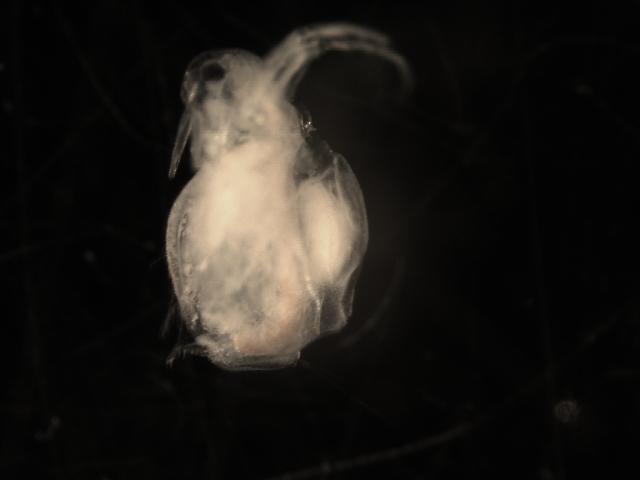
One image, one taxonomic level
The authentic micrograph here shows Moina sp. — the genus, not an identified species. Moina are tiny freshwater branchiopod crustaceans, often called water fleas. Their food-web role depends on water chemistry, algae, microbial resources and the other organisms present.
Several kinds of microprey
Aulophorus and Dero are aquatic oligochaete worm groups, whereas Chironomidae is a family of non-biting midges whose aquatic larvae can later emerge as winged adults. These are distinct life histories: combining them into a single ‘clean-up crew’ would be misleading.
Culture, observe, protect
Only reliably sourced cultures should be considered after water quality is stable. Feeding, population recovery, predator pressure and accidental escape must be assessed. The future water zone is designed with gentle circulation and quiet microhabitats rather than an ornamental waterfall.
KA’AETÉ STATUS · Future food-web research and microprey routes; no stocked animals. Species identities and compatibility require separate verification. Real construction began on 16 October 2026.