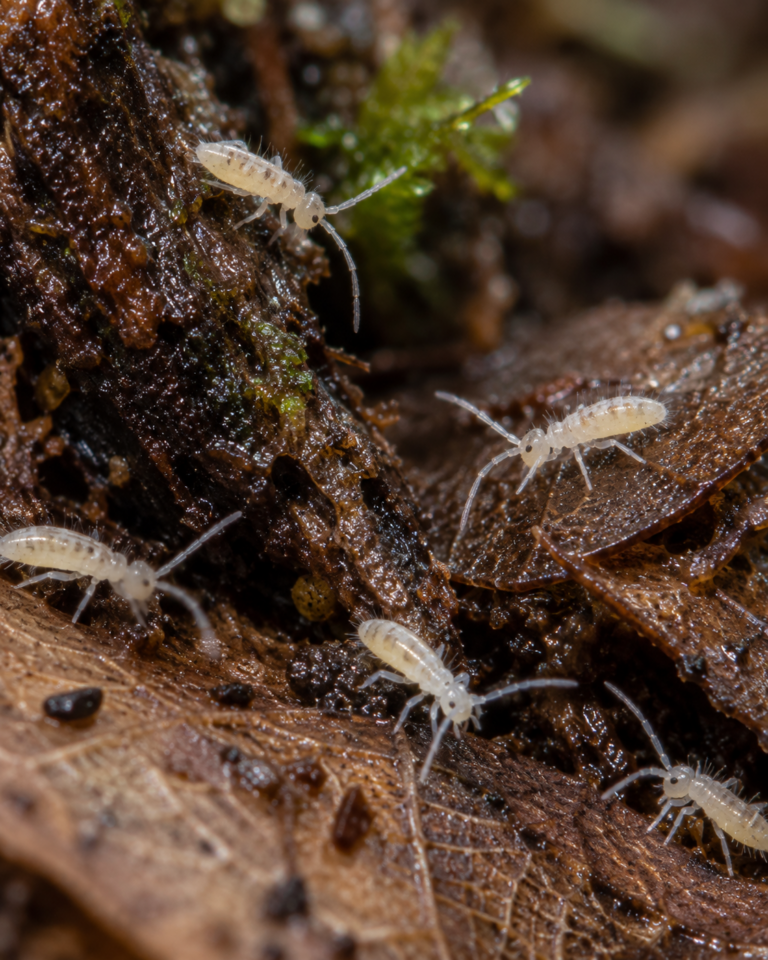
Micro-life: the engine of a bioactive ecosystem
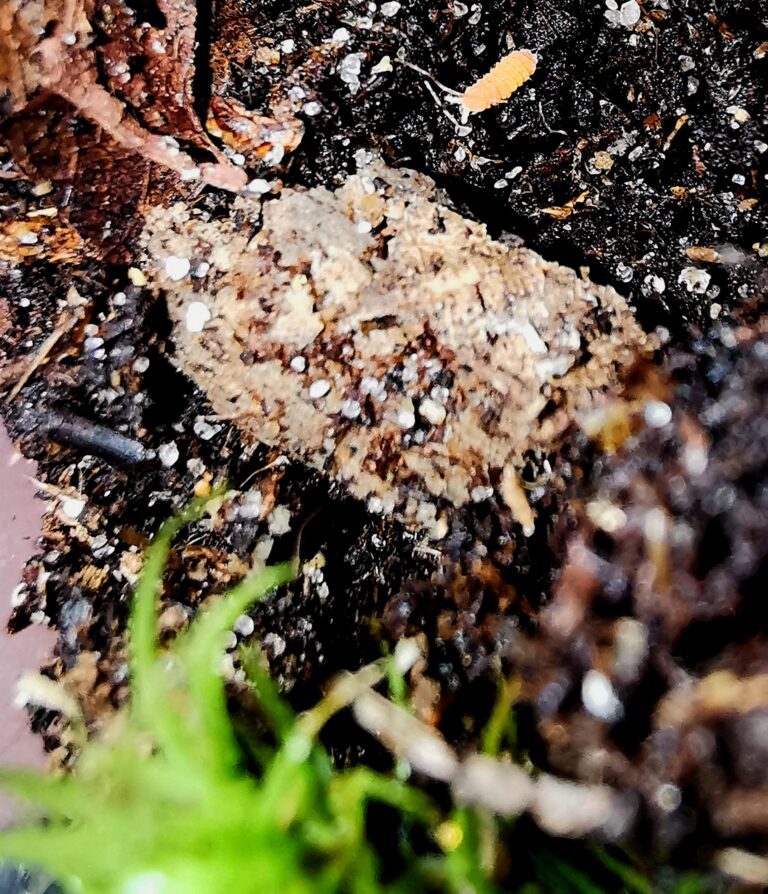
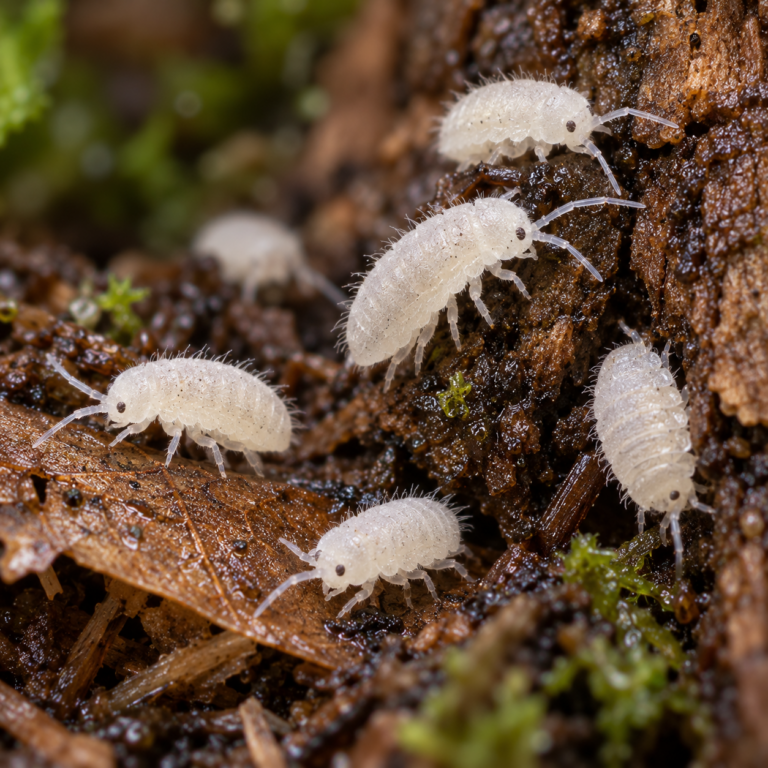
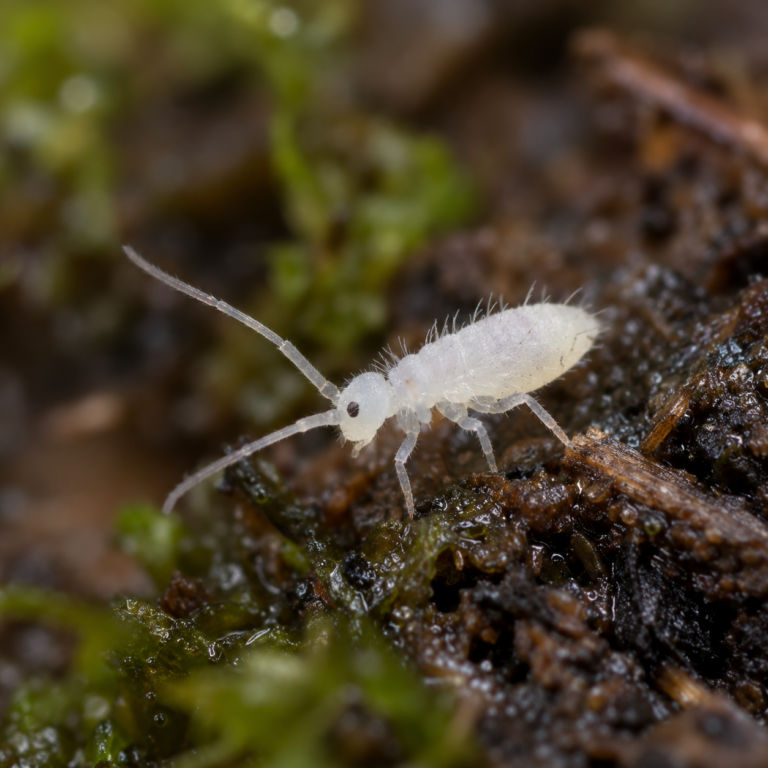
Under leaves, bark and damp soil, an entire world is working. Springtails, isopods, worms and other decomposers return dead material to the living system.
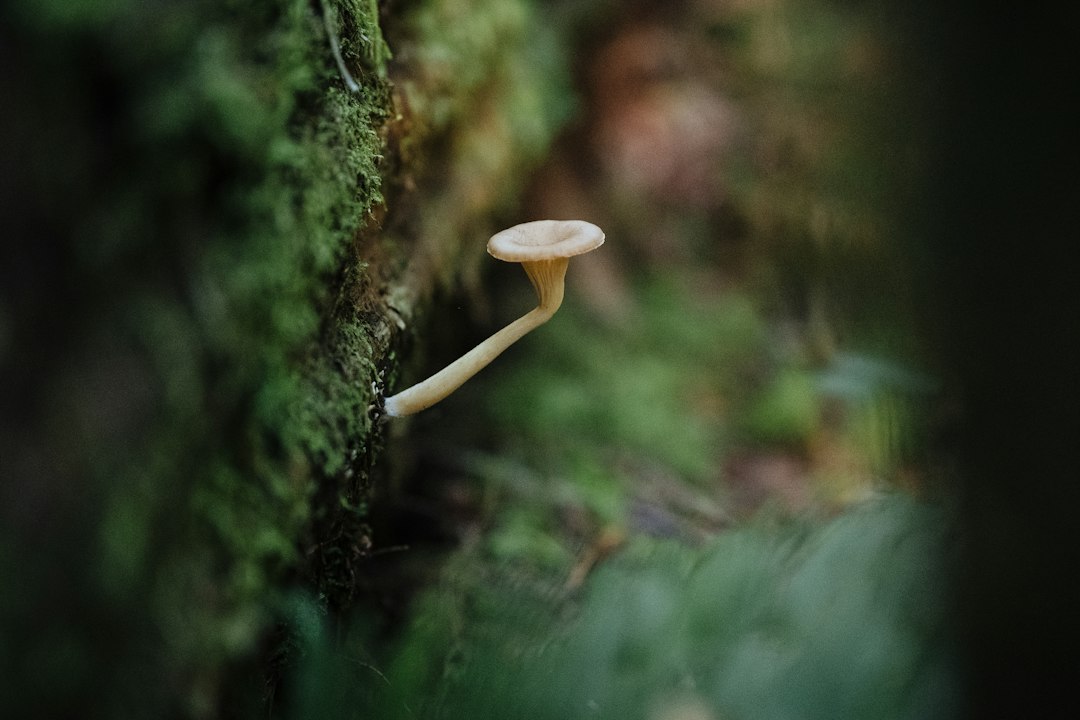
Dead material is not waste
Leaf litter, biofilm and decaying plant tissue are raw materials. Microorganisms and small detritivores turn them into nutrients and food for the next trophic level.
Small bodies, large effect
Springtails and isopods change the physical structure of litter while grazing fungi and biofilm. That can alter how quickly material is broken down.
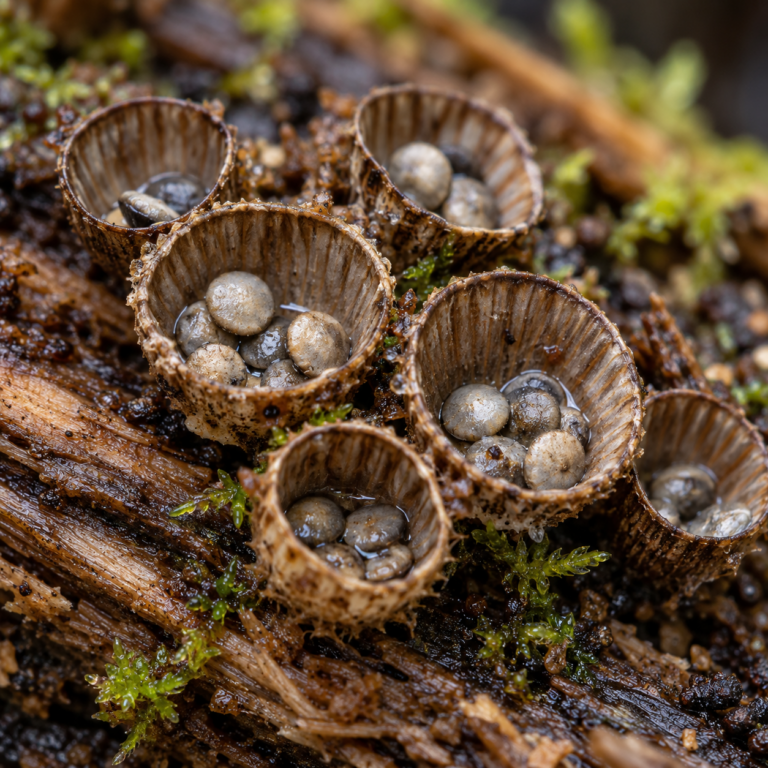
Fungi are part of the same web
Fungi break down complex organic matter. Microfauna feeds on fungal growth and spreads spores, so decomposition is a network rather than a single process.
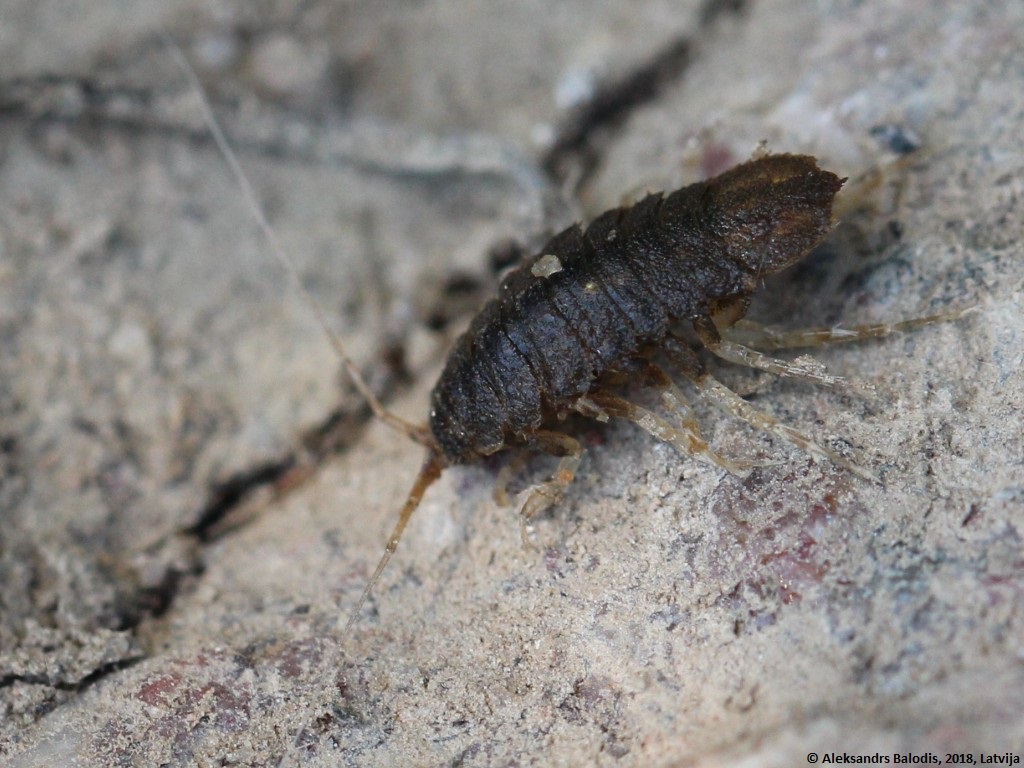
Moisture creates boundaries
A damp pocket beneath bark can support completely different activity from a drier exposed surface only centimetres away.
Fallen leaf → fungi and bacteria → springtails, isopods and worms → small predators → larger hunters. KA’AETÉ is built around these links, not around isolated species.
The hidden world, at three depths
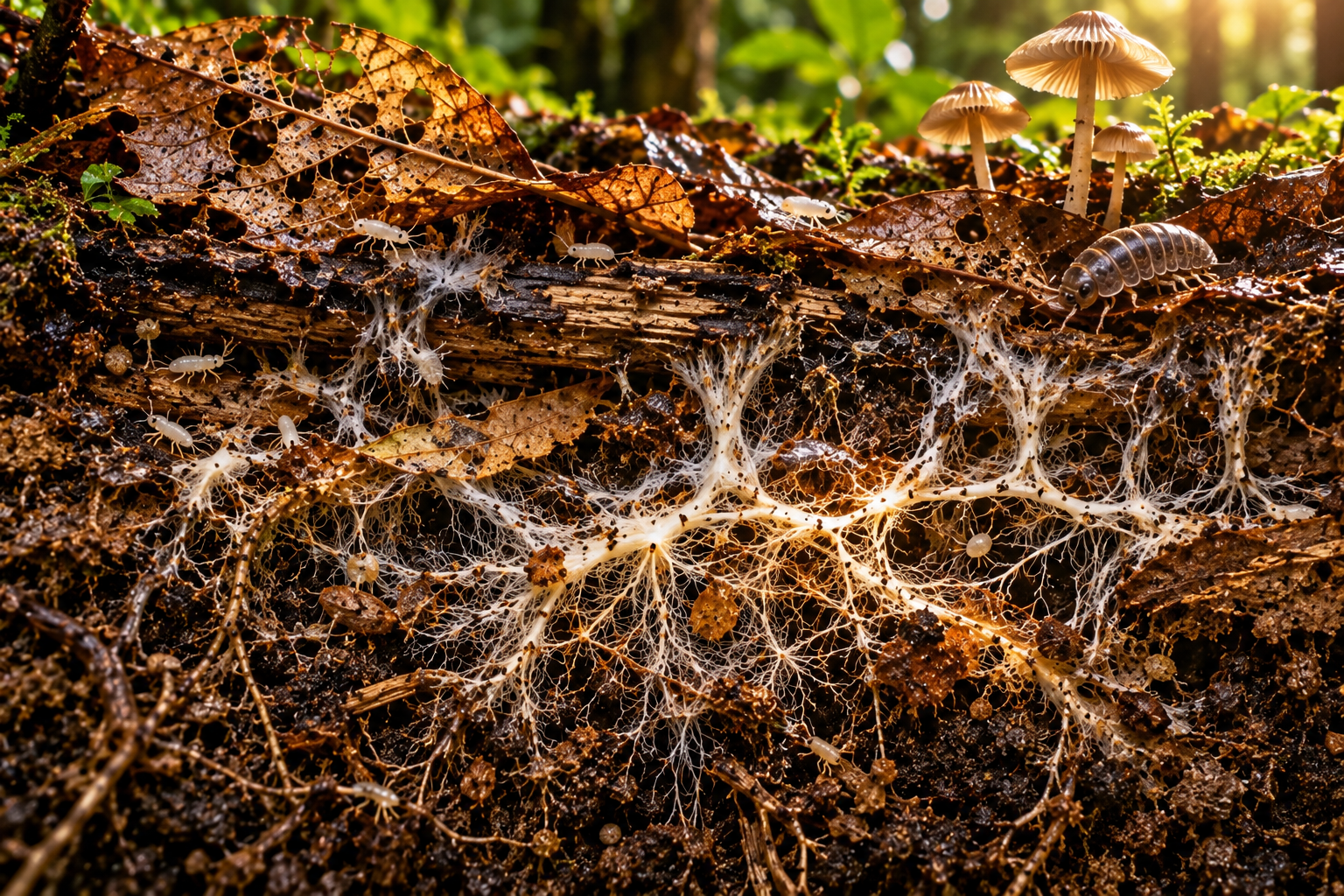
Look under leaves. Find holes, soft edges, tiny animals and fungal threads. Ask where the leaf is “going”.
Follow the chain from fragmentation to microbial decomposition and nutrient release.
Explore biofilms, oxygen gradients, carbon flow and how invisible microbial processes shape visible ecology.
The hidden micro-world
Springtails and other tiny recyclers that keep the ecosystem moving.