
Porcellionides pruinosus ‘Papaya’
The ‘Papaya’ colour form of Porcellionides pruinosus is part of KA’AETÉ’s selected land-isopod direction. The trade name identifies a captive colour line, not a separate zoological species. No isopods have been introduced to the still-unbuilt project.
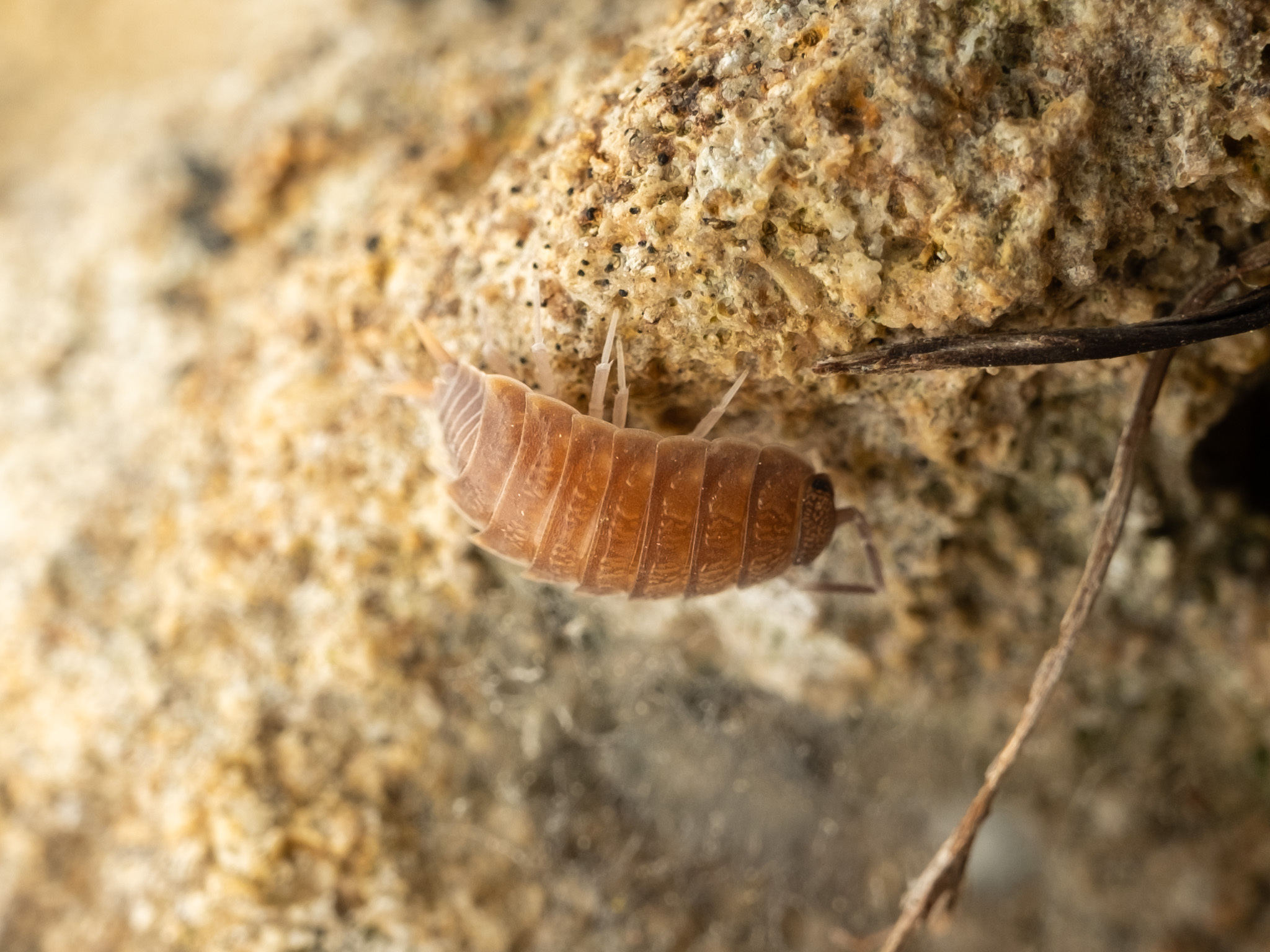
One species, many colour lines
Porcellionides pruinosus is an accepted species of terrestrial isopod. Hobby labels such as ‘Papaya’ describe a cultured appearance, not a taxonomic rank. The documented photograph used here shows the parent species; it must not be mistaken for a verified photograph of the specific Papaya line.
Working among leaves and wood
Isopods feed on decaying plant matter and help fragment leaf litter, supporting the wider microbial decomposition network. A combination of damp shelter, ventilated less-wet spots and varied litter gives these animals opportunities to move between microclimates. Behaviour and reproduction must be observed rather than assumed.
Responsible introduction
The future colony will require a verified, legally sourced captive culture, stable moisture gradients and enough places to retreat. Population growth, compatibility and competition with other isopods will be assessed after KA’AETÉ is constructed and biologically established.
PROJECT STATUS · October 2026: ‘Papaya’ remains in the selected isopod list. It is not yet present. Real construction began on 16 October 2026 with the first HPL base panel.