
Collembola — Yuukianura & Coecobrya
Beneath damp leaves, springtails browse fungi and biofilms and become prey for other small animals. KA’AETÉ’s selected springtail direction includes Coecobrya ‘Tropical White’ and Yuukianura aphoruroides. Neither is living inside the project yet.
More than a cleanup crew
Springtails (Collembola) are tiny six-legged arthropods, usually classified separately from true insects. Their diets vary by species and surroundings: fungi, microorganisms and organic particles can all matter. They are not a magic solution that prevents every mould outbreak.
Species names matter
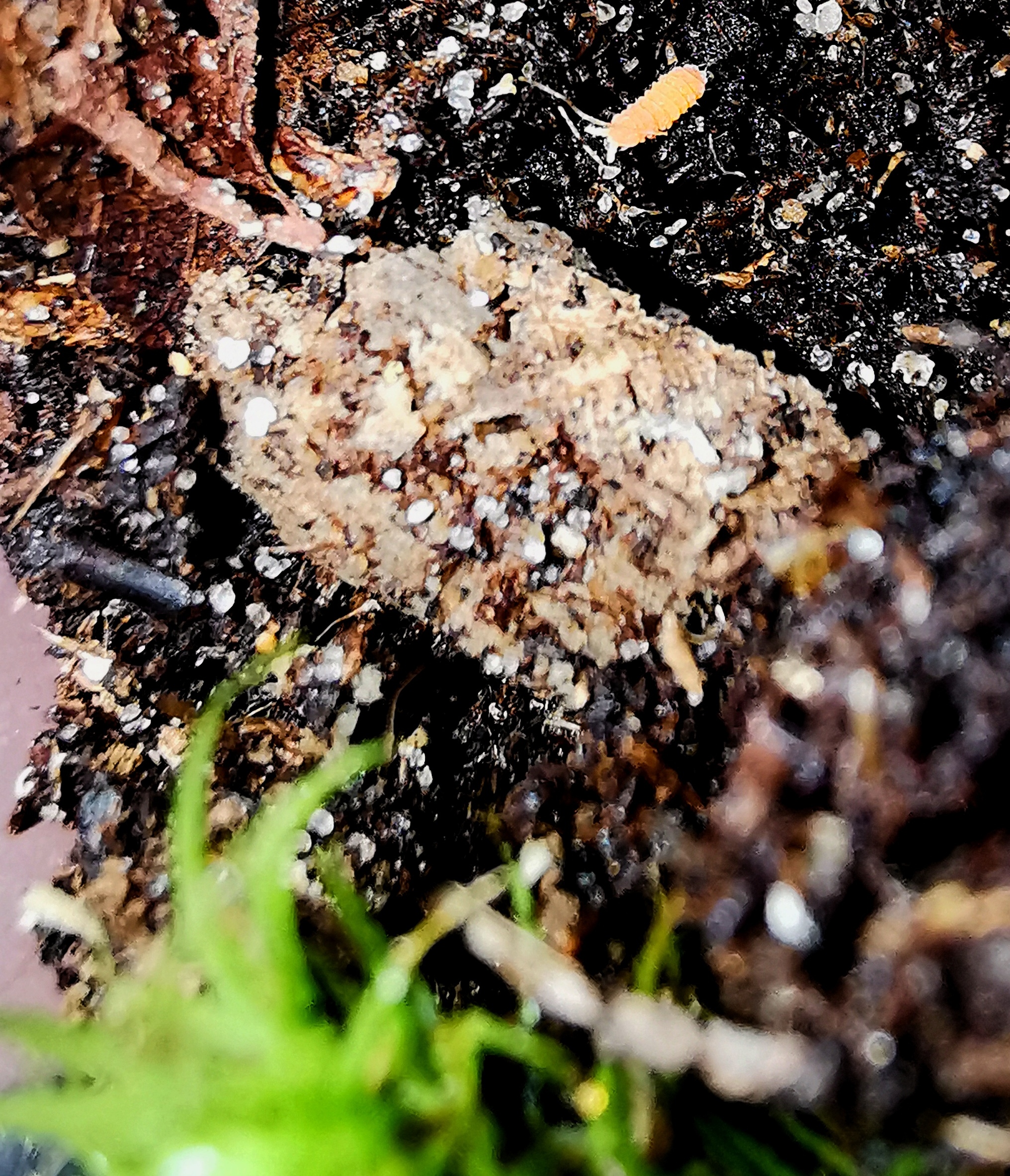
Coecobrya ‘Tropical White’ is a culture label at genus level, not an identified scientific species. Yuukianura aphoruroides is a described species, and its exact species photograph is shown here. Other springtail proposals require a separate status review rather than automatic approval.
A living refuge before predators
Moist leaf litter, refuge from direct airflow and multiple interconnected microhabitats must be established before introduction. Predators come much later, only if prey populations are stable and escape refuges work.
Current project selection: Coecobrya ‘Tropical White’ and Yuukianura aphoruroides; planned and not yet introduced. Real construction began on 16 October 2026.
Scientific background: soil microarthropods and nutrient cycling